McNeese Logo

McNEESE STATE UNIVERSITY

Experiential Learning

Experiential Learning

Service (Experiential) Learning

Service learning comes in various forms, models, and experiences and can promote various student learning outcomes. This brief review of service learning literature provides a glimpse of the current research in the topic. After a discussion of various service learning models and potential learning outcomes, this paper will provide a discussion of Quality Enhancement Plans that involve service learning and related assessment measures.

Various models of service learning (SL) have been used in higher education. Pederson, Meyer, and Hardgrave (2015) explain the different definitions of service learning. Direct SL is when a student is working in the community (typically with a non-profit organization). Indirect service learning is characterized by students “conducting mutually beneficial community, non-field-based activities, which include conducting research or producing a product/project for the organization (Pederson, et. al, 2015, p. 190).” An indirect form of service learning could take the form of an internship, doing a presentation for the community that benefits the community, or students might provide a product or service to an organization. Internships are the most commonly researched form of indirect service learning (Smith & Worsfold, 2015) (Esters & Retallick, 2013) (Adams, 2013) (Hiller, Salvatore, Taniguchi, 2014). These different types of SL were used in different academic programs. For example, Yorio & Feifei (2012) and Sheafer (2014) studied SL in undergraduate psychology students. Roy, Jenson, & Meyers (2009) examined SL usage in a library information systems curriculum; Poirrier (2001) advocated for SL in nursing schools, Poston & Smith (2015) detail an interdisciplinary SL approach with finance and accounting students. Research also found that SL does not have to be geographically bound to one location. Sandy and Franco (2014) discuss innovative ways to use SL in an online environment.

Pederson et.al (2015) also detailed some common learning outcomes from student involvement in SL: personal; professional and interpersonal; social; and academic. Yorio and Feifei (2012) found that there was a positive correlation between SL and the previously stated learning outcomes. The strongest positive correlation found was between SL and academic achievement. For example, psychology students that participated in service learning tended to improve critical thinking skills. Additionally, Hebert and Hauf (2015) identified the following outcomes from SL: increased “civic responsibility, interpersonal skills, and academic development, more academic development in terms of concrete course concepts (abstract).” Several researchers have also identified benefits to internships, specifically, especially benefits related to career readiness (Smith & Worsfold, 2015) (Esters & Retallick, 2013) (Adams, 2013) (Hiller, Salvatore, Taniguchi, 2014). Service learning can come in all shapes and sizes, and the most prevalent kind appears to be internships. Regardless, the positive aspects for the students have been quantified through multiple studies.

Many Quality Enhancement Plans (QEPs) that involve either SL or internships often use the umbrella term “Experiential Learning.” David Kolb, researcher and organizational psychologist, coined the term when he developed the “Kolb’s Cycle of Experiential Learning” (Kolb, 2015). This model describes a cyclical learning process that includes four stages: concrete experience, reflective observation, abstract conceptualization, and active experimentation. In addition to service learning and internships, experiential learning QEPs may also include undergraduate research, leadership training, and study abroad initiatives. A popular method for assessing these types of QEPs is the Integrative Learning VALUE Rubric created by the Association of American Colleges and Universities (AAC&U, 2010). This rubric emphasizes connecting relevant experience and academic knowledge; establishing connections across disciplines; adapting and applying skills, abilities, theories, or methodologies across varied situations; visual and verbal communication; and reflection and self-assessment.

Examples of Advising QEPs

References
  • Adams, C. (2013). Internships Help Students Prepare for the Workplace. Education Week, 32(19), 8.
  • Association of American Colleges and Universities. (2010). Integrative Learning VALUE Rubric. Retrieved from: https://www.aacu.org/value/rubrics/integrative-learning
  • Esters, L. T., & Retallick, M. S. (2013). Effect of an Experiential and Work-Based Learning Program on Vocational Identity, Career Decision Self-Efficacy, and Career Maturity. Career and Technical Education Research, 38(1), 69-83.
  • Hébert, A., & Hauf, P. (2015). Student Learning through Service Learning: Effects on Academic Development, Civic Responsibility, Interpersonal Skills and Practical Skills. Active Learning In Higher Education, 16(1), 37-49.
  • Hiller, M. L., Salvatore, C., & Taniguchi, T. (2014). Evaluation of a Criminal Justice Internship Program: Why Do Students Take It and Does It Improve Career Preparedness? Journal Of Criminal Justice Education, 25(1), 1-15. doi:10.1080/10511253.2013.856929
  • Kolb, D. (2015). Experiential Learning: Experience as the Source of Learning and Development (2nd Edition). Upper Saddle River, New Jersey: Pearson Education, Inc.
  • Pedersen, P. J., Meyer, J. M., & Hargrave, M. (2015). Learn Global; Serve Local: Student Outcomes From a Community-Based Learning Pedagogy. Journal of Experiential Education, 38(2), 189-206. doi:10.1177/1053825914531738
  • Poirrier, G. P. (2001). Service learning: curricular applications in nursing. Boston: Jones and Bartlett Publishers, 2001.
  • Poston, K. M., & Smith, R. A. (2015). An Interdisciplinary Service-learning Course for Undergraduate Finance and Accounting Students: The VITA Program Expanded. Journal of Financial Education, 41(1), 1-31.
  • Roy, L., Jensen, K., & Meyers, A. H. (2009). Service learning : linking library education and practice. Chicago: American Library Association, 2009.
  • Sandy, M. G., & Franco, Z. E. (2014). Grounding Service-Learning in the Digital Age: Exploring a Virtual Sense of Geographic Place through Online Collaborative Mapping and Mixed Media. Journal of Higher Education Outreach & Engagement, 18(4), 201-232.
  • Sheafer, V. (2014). Using Service Learning to Teach Classic Learning Theories. Psychology Journal, 11(2), 77-82.
  • Smith, C., & Worsfold, K. (2015). Unpacking the Learning-Work Nexus: Priming as Lever for High-Quality Learning Outcomes in Work-Integrated Learning Curricula. Studies in Higher Education, 40(1), 22-42./li>
  • Yorio, P. L., & Feifei, Y. (2012). A Meta-Analysis on the Effects of Service-Learning on the Social, Personal, and Cognitive Outcomes of Learning. Academy Of Management Learning & Education, 11(1), 9-27. doi:10.5465/amle.2010.0072

Office of Campus Compliance & Civility | Sexual Misconduct Policy | EOE/AA/ADA | Web Disclaimer | Policy Statements | University Status & Emergency Preparedness | A member of the University of Louisiana System | Consumer Disclosure Information | Title IX | Web Accessibility Statement

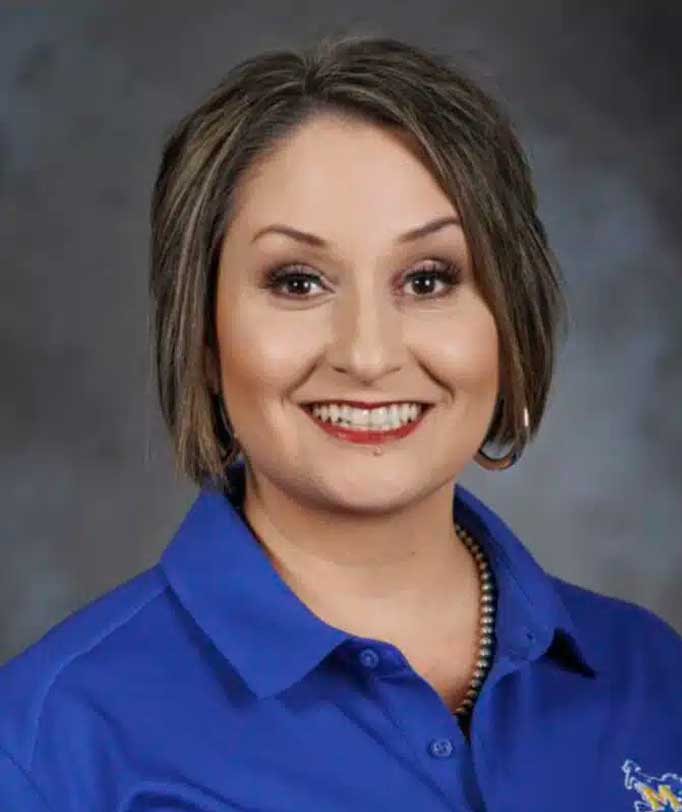
Ashley Bass

I am a McNeese graduate with a bachelor's degree in Family and Consumer Science and a concentration in Child and Family Studies. As a student, I competed on the rodeo team and served on the SGA board. I earned my master’s degree in 2022 from the University of South Dakota in Educational Administration and Leadership with a concentration in Adult and Higher Ed. I have over 13 years of experience in adult education and 20 years of educational experience.

My favorite part of being a Freshman Advisor is helping students navigate their new life routine as a college freshman by offering support with in-person office visits or by email to help students meet their goals. I always remind students of my favorite BB King quote – “Education is one thing no one can ever take away from you.”  I believe that supporting students is vital to a student's success.

In my spare time, I raise registered American Brahman cattle, and I enjoy all the "country girl" things like hunting, fishing, growing a garden and cooking.

ADVISOR FOR:
  • College of Liberal Arts (excluding music)
  • Burton College of Education (ELEM and EDPR majors)