
McNEESE STATE UNIVERSITY
Advising plays an important role in a student’s educational experience. In fact, Swecker, Fifolt, & Searby (2014) discovered that for each visit with an advisor, a student’s odds of retention increased by 13%. This synopsis describes the ever-increasing body of research on advising. It details three emerging themes in the topic and provides examples of student learning environment outcomes. Finally, the synopsis will describe elements commonly seen in Quality Enhancement Plans that include advising as a focus.
The second theme is the area of online versus in-person advising. Amador & Amador (2014) detailed that online advising was preferred when the advising was intended to be prescriptive. In contrast, Gaines (2014) found that students prefer face to face interaction (emailing was a close 2nd), and Thompson & Prieto (2013) claimed that students and faculty alike determined that online advising was significantly inferior to face to face advising. There may likely be a correlation between students’ preference for personalized advising and the preference for face-to-face interaction.
The final theme of the research is the argument for developmental advising (focused on career and personal development) as opposed to prescriptive (focused on academic schedule development). Hale, Graham, and Johnson (2009) found that 95% of students preferred and expected developmental advising as opposed to prescriptive. Anderson, et al. (2014) suggested that advising be dynamic. Advisors should gauge which type of advising each student desires and to adjust to that type.
Some research that does not fit into one of these three themes is Powers, Aaron, & Kenneth’s (2014) research on different ways to assess advising. Additionally, Williamson, Goosen, & Gonzalez (2014) suggested in-class advising while Young-Jones, Burt, Dixon, & Hawthorne (2013) suggested using advising as a tool for student intervention.
<p">There were three main student environment outcomes. First, Rogers, Blunt & Trible (2014) and Swecker, et al. (2014) revealed that as advising became stronger, student retention also increased. Second, Young-Jones, et al. (2009) and Swecker, et al. (2014) discovered that there is a positive correlation between positive advising practices and student success. Finally, Swecker, et al. (2014) claimed that student persistence increased as advising efforts were increased.
Examples of Quality Enhancement Plans (QEPs) involving advising include such components as early intervention, academic curriculum planning, and training faculty in advising best practices. Advising QEPs often include complementary initiatives in new student orientation and career planning. Assessment measures of academic progress in cohorts include persistence, academic standing, number of credit hours earned in the academic year, grade point average, and tracking referrals to campus resources. Some institutions adopt software such as AdvisorTrac to monitor student interactions. The National Academic Advising Association’s (NACADA) Academic Advising Inventory and the ACT Survey of Academic Advising are frequently incorporated into QEP assessment.
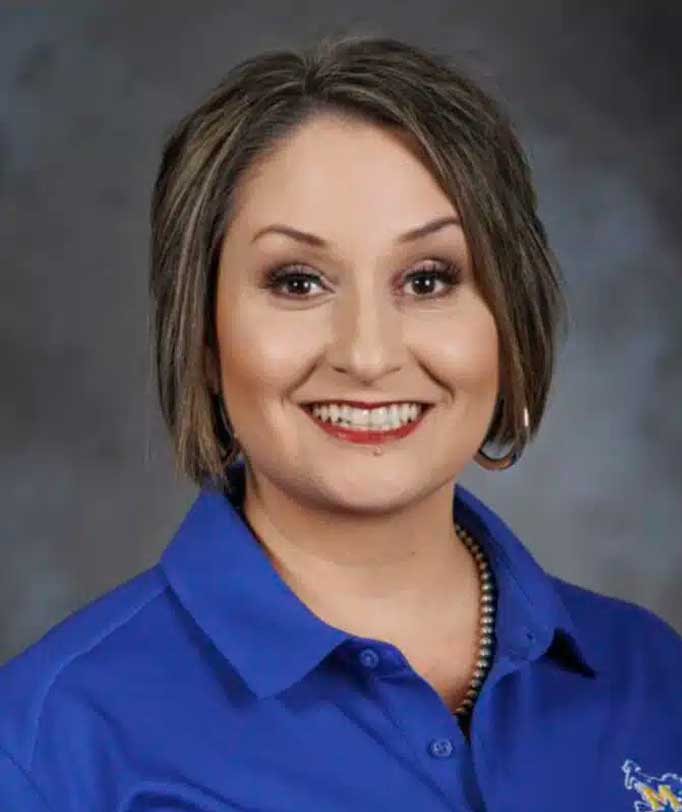
I am a McNeese graduate with a bachelor's degree in Family and Consumer Science and a concentration in Child and Family Studies. As a student, I competed on the rodeo team and served on the SGA board. I earned my master’s degree in 2022 from the University of South Dakota in Educational Administration and Leadership with a concentration in Adult and Higher Ed. I have over 13 years of experience in adult education and 20 years of educational experience.
My favorite part of being a Freshman Advisor is helping students navigate their new life routine as a college freshman by offering support with in-person office visits or by email to help students meet their goals. I always remind students of my favorite BB King quote – “Education is one thing no one can ever take away from you.” I believe that supporting students is vital to a student's success.
In my spare time, I raise registered American Brahman cattle, and I enjoy all the "country girl" things like hunting, fishing, growing a garden and cooking.