
McNEESE STATE UNIVERSITY
Mandatory 2016/2017 Annual Clery & CSA Training
1
PRESENTED BY YOUR MCNEESE STATE UNIVERSITY POLICE DEPARTMENT 24 HOURS-A-DAY 337-475-5711
YOUR JOB AS BEEN DETERMINED TO BE A CAMPUS SECURITY AUTHORITY
(CSA) POSITION, MAKING THIS TRAINING A MANDATORY ANNUAL
REQUIREMENT.
RULE OF
THUMB
The focus of this training and your statutory
duties as a Campus Security Authority (CSA)
might sometimes seem complicated even
daunting.
However, the simplest Rule of Thumb to
follow is that if you See It, Hear It then
Report it immediately to the University
Police Dispatch 24 hours-a-day.
CSAs are not required to interpret a crime
report, or even judge whether it may be
valid or not. But, if you receive a report of
criminal activity or observe a crime, then if
you report that information to University
Police your responsibility has been
completed.
Our first goal is always the safety of a crime
victim and to ensure that they receive the
support services, medical treatment or
victim assistance they deserve.
2
UNIVERSITY POLICE OPERATE 24 HOURS-A-
DAY/365 DAYS-A-YEAR. YOU CAN ALWAYS CALL
OUR DISPATCH CENTER AT ANYTIME.
In April, 1986 Jeanne Clery 19 years-old, was raped and murdered
in her dorm room at Lehigh University. Her assailant, who is
spending life behind bars without parole, was also a student at
the school whom Jeanne did not know prior to the attack.
Prior top this attack other assaults had occurred in and around
her dorm room complex. There has been a rapid increase of
violent and non-violent incidents on campus; while crimes were
being reported to campus authorities, administrators often failed
to provide adequate warnings about those incidents, and there
were no uniform laws mandating them to do so.
The Jeanne Clery Disclosure of Campus Security Policy and
Campus Crime Statistics Act (Clery Act) of 1991 was enacted in her
memory by Congress. The Act required colleges and universities
to disclose their security policies, keep a public crime log, publish
an annual crime report and provide timely warnings to students
and campus employees about a crime posing an immediate or
ongoing threat to students and campus employees. The law also
ensures certain basic rights for victims of campus sexual assaults
and requires the U.S. Department of Education to collect and
disseminates campus crime statistics. The Act has since been
amended several times.
Overview
3
The goal of the Clery Act is to ensure students, prospective
students, parents and employees have access to accurate
information about crimes committed on campus and campus
security procedures.
"A personal note about Jeannie...she was your typical
freshman. She was a good student, well-liked, and a tad shy,
but social. She was pretty, athletic, and had an infectious
laugh. She was slightly a tomboy, and obviously grew up in a
house with two brothers as she didn't take much crap from her
guy friends and could have probably beat most of us in an arm
wrestle. She was our friend, my occasional date, a great person
to hang out with, just one of our group. [She was] special..." -
Andy Cagnetta, Friend of Jeanne
"Jeanne loved Lehigh and she loved her Lehigh friends. I was
pleased to see her growing into a mature young woman.
Jeanne would tell me stories of her time at Lehigh, like being
thrown upside down in a trash barrel, and I would say
kiddingly, 'Were you in slacks?' 'Of course I was, Mom.' And she
loved going to Phi Sig Fraternity, her favorite fraternity. Jeanne
was so sweet and beautiful (more beautiful inside) but also
strong and fun loving. She was joy, total joy." - Connie Clery,
Jeanne's mother
Overview
4
The
Clery Act
Information disclosed under the Clery Act
can assist students and parents in making
decisions which affect their personal safety.
Each college and university is responsible for establishing appropriate procedures
to implement these requirements.
The can learn more about the Clery Act at:
http://www.mcneese.edu/police/clery_act
The McNeese State University Annual Security Report (ASR) is available at:
http://www.mcneese.edu/f/c/1ad39649
Additional information about Campus Security Authoritys is located on-line at:
http://www.mcneese.edu/police/campus_security_authority_csa
Overview
5
Introduction & Contents 06 Slides
Lesson 1: Clery Act Overview 06 Slides
Lesson 2: Campus Security Authority 07 Slides
Lesson 3: Responsibilities and Reporting 11 Slides
Lesson 4: Review and Guidance 04 Slides
Table of Contents
6
Lesson 1:
Clery Act Overview
7
8
Lesson 1: Clery Act Overview
What is the Clery Act?
The Act requires institutions of higher
education receiving federal financial aid to report
specific crime statistics on campus and provide safety and crime
information to members of the campus community.
The law is tied to federal student financial aid programs and requires colleges
and universities to make timely warnings, emergency notifications, and provide
annual information about campus crime statistics and security policies.
Violators can be fined up to $37,000 per incident by the U.S. Department of
Education, the agency charged with enforcement of the Act.
Why the Concern about Crime Reports?
Many crimes, especially sexual assaults, are not
always reported to police.
Nationwide it is estimated by the Federal Bureau
of Justice Statistics that up to 42% of serious
violent crime (defined as rape or sexual assault,
robbery, or aggravated assault), is not reported to
the police.
The Clery Act requires that we gather and publish
crime data from multiple sources (including
Campus Security Authorities) to ensure that
students and others know about potential
dangers on campus.
9
Lesson 1: Clery Act Overview
Requirements of the Clery Act
. Disclose, collect, classify and count crime reports and statistics
. Identify & Train Campus Security Authorities. About 400 at McNeese.
. Issue Crime Alerts - timely warning for any Clery Act-specified crime that
represents an ongoing threat to the safety of students or employees.
. Issue Emergency & Timely Warning Notifications upon confirmation of
significant emergency or dangerous situations or ongoing threats.
. Publish Annual Security Report (ASR)
. Submit Crime Statistics to Department of Education.
. Maintain a publicly available daily crime log
. Implement missing student notification procedures
. Maintain Fire Safety information - including fire log, annual fire report
with statistics and policy statements.
10
Lesson 1: Clery Act Overview
Requirements of the Clery Act
Requires institutions to report (annually and on-going)
the following:
Where crimes occurred
Type of crimes reported
Track the number of selected arrests by crime type.
Employees and students are notified by October 1 of each year that the
campus annual security report is updated and available.
The McNeese State University Annual Security Report is available on-
line at: http://www.mcneese.edu/f/c/1ad39649
The current report is the 2016 Report which was Published September 29, 2016,
covering crime data reported during calendar year 2015.
11
Lesson 1: Clery Act Overview
Review
Many crimes, especially sexual assaults, are not always reported to the police.
McNeese has a low incidence of sex crimes as well as felony crimes in part because the campus has
a high number of commuter students and a low number of dormitory residents.
The Clery Act requires institutions of higher education receiving federal financial
aid to report specific crime statistics on campus and provide safety and crime
information to members of the campus community.
Each campus is responsible for establishing appropriate procedures to implement
these requirements.
Employees and students are notified by October 1 of each year that the campus
Annual Security Report (ASR) is updated and published on the police web page.
University Police also publishes an Annual Update Report which provides not just
specific crime data but also information on the activities of and services provided
by the police department.
This can be downloaded from the University Police web page at www.mcneese.edu/police
12
Lesson 1: Clery Act Overview
Lesson 2:
Campus Security Authority
13
What is a Campus Security Authority?
The Clery Act requires that we gather and publish
crime data from multiple sources, including
Campus Security Authorities.
The law defines 4 categories of a Campus Security Authority:
University Police
Non-police security staff responsible for monitoring University property
People/Offices designated under our policy as those to whom crimes should be
reported
Officials with significant responsibility for student and campus activities
Faculty are exempt unless the faculty member serves as an Advisor to a club or
organization on campus.
Cafeteria staff, Maintenance & Facility workers, and clerical staff are not CSAs.
14
Lesson 2: Campus Security Authority
How is a campus official designated as a
Campus Security Authority (CSA)?
CSAs are defined by job function and not by title.
Functions
A CSA is anyone who has significant responsibility for student AND campus
activities. This may be YOU.
The law defines "significant responsibility broadly and includes, but is not
limited to:
Student Housing
Student Discipline and Campus Judicial Proceedings
Student Organization Advisors
Approximately 400 McNeese State University employees are defined as CSAs.
Paid and un-paid students greatly add to this total.
15
Lesson 2: Campus Security Authority
Who are CSAs?
16
Lesson 2: Campus Security Authority
CSA Reporting Exemptions
1. Licensed professional mental health counselors
2. Pastoral counselors (employed by a religious organization to provide confidential
counseling) and are working within the scope of their license or religious assignment.
Although licensed professional mental health and pastoral counselors are exempt from Clery
Act requirements, the University encourages such counselors to tell victims about the
Confidential Reporting Process if, in their judgment, it is appropriate to discuss crime reporting
with this client
A confidential report of a crime can be made to the University
Police on-line using the Silent Witness Program:
https://www.mcneese.edu/police/silent_witness_form
Victims have the option of reporting crimes confidentially to a CSA. This means the University
will keep a record that a crime occurred but will not publish any identifying information.
Reports filed in this manner are counted and disclosed in the annual crime statistics.
17
Lesson 2: Campus Security Authority
What If The Person Reporting the Crime to Me is in Imminent Danger?
If the person reporting the crime is on campus and is imminent danger or harm:
1.Obtain the cell phone number and/or campus extension.
2.Confirm their location.
3.Call University Police from any campus extension and dial 9-1-1. This call will go directly
to the University Police Dispatch Center.
4.If you only have a cell or are on a non-campus phone extension, 9-1-1 and request the
McNeese State University Police Department when the 9-1-1 operator comes on the line.
5.Tell the person who reported their dangerous situation to you to also dial 9-1-1 just as
you are doing.
If the incident is occurring off campus:
1.Dial 9-1-1 using your cell phone or off campus phone.
2.Tell the person reporting their dangerous situation to you to also dial 9-1-1 so that local
law enforcement and emergency services can be dispatched to their location.
18
Lesson 2: Campus Security Authority
C:\Users\MSU\AppData\Local\Microsoft\Windows\Temporary Internet Files\Content.IE5\EYXE3VJX\large-Mobile-Phone-1-0-13612[1].gif
C:\Users\MSU\AppData\Local\Microsoft\Windows\Temporary Internet Files\Content.IE5\OIWZDW42\480px-Emblem_phone.svg[1].png
Review
CSAs are defined by job function and not by title.
A CSA is anyone who has significant responsibility for student AND campus
activities.
Examples of CSAs include Deans, Student Housing Staff, Athletic Coaches, and
Student Coordinators and Advisors.
Faculty who are Club Advisors.
Student CAs as well as ticket takers, ushers, student organization officers
overseeing an event, etc. whether paid or volunteer.
Non-examples include administrative , clerical staff or faculty positions without
responsibility for student activities or advising.
Licensed professional mental health and pastoral counselors are exempt from
Clery Act requirements as or Faculty, unless the faculty member is an Advisor to a
student organization.
19
Lesson 2: Campus Security Authority
Lesson 3:
Responsibilities
and Reporting
20
What are you required to report?
. Criminal homicide (murder and manslaughter)
. Sex offenses, forcible & non-forcible
. Aggravated assault
. Robbery
. Burglary
. Motor vehicle theft
. Arson
. Hate crimes, including any of the 7crimes listed above, or any other crime causing bodily injury, if
motivated by race, gender, gender identity, religion, sexual orientation, ethnicity, national origin or
disability.
. Arrests & discipline referrals of students, staff, and faculty for liquor, drug and weapons law
violations.
Amendments to the Clery Act in 2008 expanded hate crimes to include:
. Larceny-theft . Simple assault . Vandalism . Intimidation
Amendments to the Clery Act and VAWA in 2013 mandated required reporting of:
. Stalking . Dating Violence . Domestic Violence
21
Lesson 3: Responsibilities and Reporting
What are you required to report? Continued
In March 2013, President Obama signed a bill that strengthened the Violence Against
Women Act (VAWA). Included in the bill was the Campus Sexual Violence Elimination
Act (Campus SaVE) that amends the Clery Act to include reporting of the following
effective 2014:
. DATING VIOLENCE . DOMESTIC VIOLENCE . STALKING
.The 3 new Clery crimes listed above must be tracked for inclusion in reporting in
our Clery crime statistics starting with the October 2014 Annual Security Reports.
Work with your respective chain of command about any additional reporting of
these types of crimes.
.The Annual Security Report must also include updated policy statements to
include VAWA requirements addressing Sexual Harassment Policy and Procedures
for Responding to Complaints of Sexual Harassment.
22
Lesson 3: Responsibilities and Reporting
Reporting depends on location
23
Lesson 3: Responsibilities and Reporting
Reporting depends on location
24
Lesson 3: Responsibilities and Reporting
YOU MUST REPORT IF THE INCIDENT OCCURRED
Off Campus, but closely related to the University
Under the law, some off-campus locations are deemed so closely related to the
University that crimes at these locations are included in campus crime statistics.
Any building or property owned or controlled by a student organization
recognized by McNeese State University.
Any building or property owned or controlled by McNeese State University
that is used in direct support of the Universitys educational purposes, is
frequently used by students, and is not on-campus property.
Off campus at training or sporting events where a location is leased, used
rented for more than 1 night or on a reoccurring basis, (usually at a hotel).
Reporting depends on location
25
Lesson 3: Responsibilities and Reporting
NOT A MANDATORY report if
A person tells you about a crime that occurred before he/she came to the University
OR
While he/she was away from campus and not involved in a University activity (e.g., at
home during spring break)
When in doubt, call the University Police. Even if an incident occurred off campus, the
University Police want to ensure that every victim receives the care they deserve.
ALWAYS ENCOURAGE A CRIME VICTIM TO REPORT. A PRIMARY
CONCERN OF THE UNIVERSITY POLICE IS TO ENSURE THAT EVERY
VICTIM RECEIVES SUPPORT AND THE SERVICES THAT WILL HELP
THEM THROUGH ANY CRITICAL INCIDENT OR CRISIS SITUATION.
Reporting an Incident
As a Campus Security Authority
you are required to:
. You do not have to prove what happened
or who was at fault. The police do this.
.You are not suppose to find the perpetrator.
.Do not identify the Victim unless the Victim consents to be identified.
.Get the facts - When, what, where, who, etc.
. Report all Clery Act related crimes immediately to the University Police
Department so a victim is safe, a complete investigation is begun, individuals are
held accountable and so that the University can comply with timely warning
policies and have accurate crime statistics for the federally required Annual
Security Report.
. Inform victims of their options, including confidential reporting options and
offer referrals to resources.
26
Lesson 3: Responsibilities and Reporting
Reporting an Incident - Get the Facts
Important Questions to Ask
27
Lesson 3: Responsibilities and Reporting
Reporting an Incident - Next steps
. Simply call the University Police at 337-475-5711 or at extension 5711 from a
University phone 24 hours-a-day. This is the simplest and quickest way to report
and get help for a victim.
. Describe the incident/crime as completely and accurately as you can.
. You do not need to make a judgment about or investigate what happened, just
get the facts. CSAs ARE NOT RESPONSIBLE FOR DETERMINING WHETHER A CRIME
TOOK PLACE THAT IS THE FUNCTION OF LAW ENFORCEMENT.
-or-
.Complete a Crime Reporting/Incident Form (forms available from Clery Act
Coordinator and online).
Note: If the victim reports a crime to you, but wishes to remain anonymous, you
still need to notify University Police or submit a Crime Incident Report (but, do not
need to identify the victim).
28
Lesson 3: Responsibilities and Reporting
Reporting an Incident - Filling out the Report
. Answering questions on the form will help determine the correct category
(you dont have to know the specific crime classification)
. Write a brief description of the incident
Timely reporting is critical!
Victims should also be advised to contact
University Services to file a complaint for a
Student Code Violation and the Title IX
Coordinator to file a harassment or sexual
assault complaint these are separate
actions above and beyond a traditional police investigation.
29
Lesson 3: Responsibilities and Reporting
Review
30
Lesson 3: Responsibilities and Reporting
Lesson 4:
Review and Guidance
31
Review
.The Clery Act requires institutions of higher education receiving federal financial
aid to report specific crime statistics on campus and provide safety and crime
information to members of the campus community.
.Each college or university is responsible for establishing appropriate procedures to
implement these requirements.
.A Campus Security Authority (CSA) is anyone who has significant responsibility for
student AND campus activities.
.Students in many capacities are also defined as CSAs and have mandatory
reporting responsibilities.
.CSAs are required to: Get the facts, report all Clery related crimes to the university
police, inform victims of confidential reporting options and offer referrals to
resources.
32
Lesson 4: Review and Guidance
Review
You can get additional information and advice
from your Campus Clery Act Coordinator,
Deputy Chief Mike Powell McNeese State University Police 337-475-5711
Learn more about the services your University Police Department can
provide by visiting our web page at: www.mcneese.edu/police
.Guidance is also available in the U.S. Department of Education Handbook for
Campus Safety and Security Reporting.
http://www2.ed.gov/admins/lead/safety/handbook.pdf
.Also refer to the 2013 CANRA (Child Abuse and Neglect Reporting Act) and the
University's policy on Reporting Child Abuse and Neglect.
33
Lesson 4: Review and Guidance
Anonymous Reporting
If the victim of a crime reports to you that they dont
want to make a police report.
A victim is not required to report their victimization to the police.
But a report to the police may prevent someone else from becoming a victim.
An anonymous report will always be accepted by University Police:
Either directly from a victim, through a CSA, or via the University Police
Silent Witness On-line reporting program at:
http://www.mcneese.edu/police/silent
.University Police have advanced training is sexual assault investigations and are
victim centered. MSU-PD works closely with the Sexual Assault Nurse Examiner
(SANE) Program who also provide in-service training to our Officers.
.Learn more at:
.http://www.calcasieuda.com/programs-services/sexual-assault-nurse-examiner/
.http://www.kplctv.com/story/8219903/help-for-victims-of-sexual-assault
.https://www.mcneese.edu/policy/sexual_misconduct_policy
34
Lesson 4: Review and Guidance C:\Users\MSU\AppData\Local\Microsoft\Windows\Temporary Internet Files\Content.IE5\W7H6SOKQ\rtbav2r[1].jpg
Registering Your Success
If you completed this annual CSA training in a classroom:
Make sure you have signed the roll sheet which documents
your attendance.
If you viewed the PowerPoint on-line:
.Send your email confirmation of self-attendance to Deputy Chief Mike Powell at
the McNeese State University Police Department. He coordinates safety and risk
management issues for the university community.
.Deputy Chief Powells email is:
.mpowell@mcneese.edu
35
Lesson 4: Review and Guidance
C:\Users\MSU\AppData\Local\Microsoft\Windows\Temporary Internet Files\Content.IE5\EUPE05PK\test-clip-art-cpa-school-test[1].png
36
Lesson 4: Review and Guidance
THANK YOU!
Call any time 337-475-5711
Extension 5711
YOUR POLICING, PUBLIC SAFETY AND HELPING DEPARTMENT MCNEESE STATE POLICE
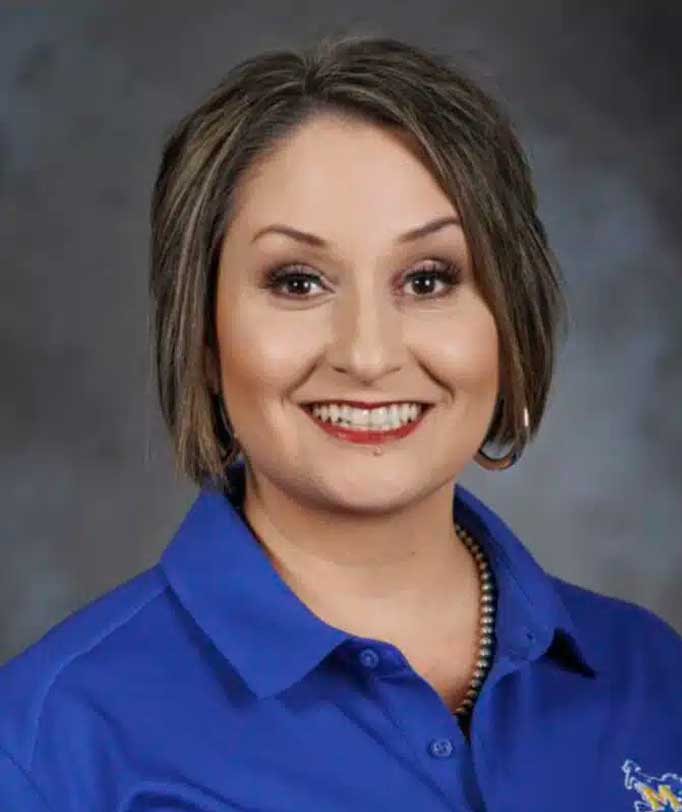
I am a McNeese graduate with a bachelor's degree in Family and Consumer Science and a concentration in Child and Family Studies. As a student, I competed on the rodeo team and served on the SGA board. I earned my master’s degree in 2022 from the University of South Dakota in Educational Administration and Leadership with a concentration in Adult and Higher Ed. I have over 13 years of experience in adult education and 20 years of educational experience.
My favorite part of being a Freshman Advisor is helping students navigate their new life routine as a college freshman by offering support with in-person office visits or by email to help students meet their goals. I always remind students of my favorite BB King quote – “Education is one thing no one can ever take away from you.” I believe that supporting students is vital to a student's success.
In my spare time, I raise registered American Brahman cattle, and I enjoy all the "country girl" things like hunting, fishing, growing a garden and cooking.